Gaza: He ran towards the airstrike to help. Then the second bomb hit.

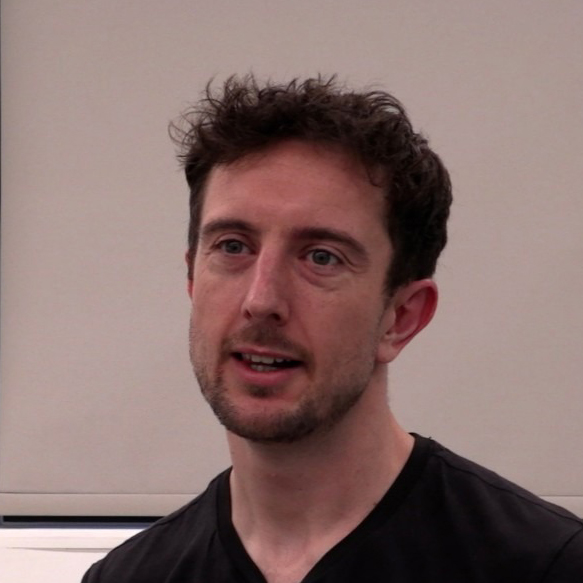
Steve Davidson faced many challenges as a nurse working in Gaza. Key among them: how to support severely malnourished, wounded patients gain weight. He reflects on one memorable patient and the profound impact his MSF colleagues have been able to make despite everything.
“As nurses, we’re with our patients every day. We know them. We see them. We’re the first ones to understand what’s going right or wrong with a patient. We use the doctor as a tool – a very intelligent tool, of course – that we can point at our patient and say, ‘go fix this’.
We also support our patient with things like wound care and nutrition. In Gaza, there was an overwhelming need for both.
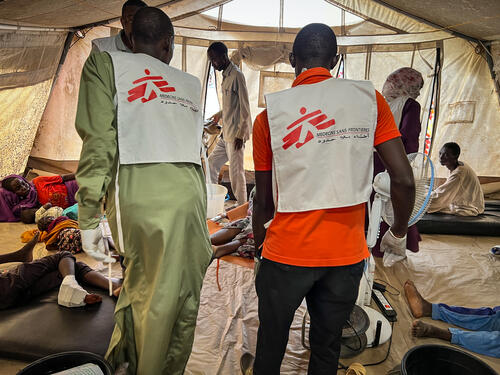
During my first time in 2024, I worked at the MSF field hospital in central Gaza that had only just been set up. From a patch of dirt, MSF teams had built a 25-bed facility with an operating theatre, an intensive care unit (ICU) and an emergency department using tents and semi-permanent structures. Out of these simple structures we were providing high level surgery to the blast victims from the many airstrikes by Israeli forces.
By the time I went back in October 2025, the facility had grown to 178 beds and due to the ceasefire, which had just come into place, the slightly lower level of intensity meant we could improve some processes. But the needs were still huge, people in Gaza were still being attacked, and our resources were limited by the restrictions on bringing in essential equipment and supplies.
Our work saves lives
Omar
I first met Omar* in surgery. He was a regular nineteen-year-old who used to love playing football, and was good at it, his mother told me. Following an airstrike, Omar had run to help those who were hit and as he went to pull a man out of the blast zone, a second bomb had landed and hit him. This is known as a ‘double tap’ strike.
Both of Omar’s legs were broken and in need of external fixation. Most concerning were the life-threatening shrapnel injuries to his abdomen. The bomb that hit him created tiny holes in his gut which made his care very challenging.
“He was eating as much as he could, but his weight kept dropping; from a healthy 80 kilograms he weighed just 35”
Initially, Omar had a loop ileostomy, an operation to divert waste from his small intestine, allowing his extensive surgery to heal. But the stoma that had been inserted needed moving – its high position meant that he was only able to use a very short part of his bowel to absorb nutrients from his food. He was eating as much as he could, but his weight kept dropping; from a healthy 80 kilograms he weighed just 35.
Fortunately, the surgery went well – the surgeon managed to move the stoma. But for the next month, Omar went from problem to problem.
The situation in Gaza
Our ability to support our patients’ nutrition was different from a year before. Before, they would lose weight, but we had nothing to feed them – there just wasn't any food available and everyone, medical staff included, was hungry.
The second time around some products were starting to come in, including nutritional supplements. We were just about able to start increasing the weight of some of our patients.
Some had really bad wounds, and if they didn't have the right nutrition, their wounds wouldn't heal. Some patients who needed skin grafts couldn’t have them because they were too skinny. The graft would go against skin and bones. We needed to give these patients nutritional supplements to plump them up enough to be able to have the space to do the graft.
But while we're waiting for the graft, we have to clean the wound in theatre, which means we need to put them under general anaesthetic, which means we need to fast the patient. So it becomes a vicious cycle. It was incredibly complex to manage these severely underweight patients.
It took a lot of working out, but it was great to make some progress and see our patients start to recover.
After I left, our supplies were cut off again. From 1 January, we had a new order from the Israeli authorities that that would potentially stop MSF from working in Gaza or the West Bank. From then it became a lot more difficult to get supplies in.

Approaching the end
After the surgery, Omar couldn't use his bowels because they needed time to rest. We put him on something called Total Parenteral Nutrition (TPN), which is where we give nutrients and lipids through the vein.
Eventually, we started feeding him proper food, using more of his bowels. But whenever they started working, Omar would have problems due to the tiny invisible holes that the bomb had made in his stomach. These holes led to fecal matter leaking into his abdomen, so we needed put him back on the TPN.
The lowest Omar weighed was 25 kilos and I was extremely worried about him during those weeks. He was so frail and couldn't move very much in his bed, but despite all this I remember coming to see him every morning and he'd always give you a big smile and a wave.
Every day we would weigh Omar, and although he stopped losing weight dramatically it was such a struggle for him to gain any. Very slowly we would feed him a bit more, and we managed to find a very highly concentrated supplement called ‘nutrihope’ which helped him.
Between the brilliant nursing and surgery teams it was a huge joint effort to work with Omar and get his bowels working properly again. I was approaching the end of my time in Gaza, and finally Omar’s weight started going up at his daily weighings, to my huge relief.
He was able to get out of bed, and I loved seeing his grin flash by as he was pushed around in his wheelchair by his brother.
MSF's impact
We only have three operating theatres in this small, tented hospital, but we were carrying out 3,500 surgeries per month, the second highest number out of all the hospitals in Gaza.
A lot of our patients came in as orthopaedic patients who needed primary surgery to deal with the impact of trauma. For example, they might have a section of their leg blown away and we need to create and manage a stump. Then they would need plastic surgery to fix the skin.
Along with the primary surgeries we were also dealing with a huge backlog of patients who needed secondary surgeries. For example, a stoma bag that had been installed during a primary surgery needed to be reversed six months later.
In Gaza, MSF is trusted to provide people with a high standard of care. If we weren't there, that would be a huge lifeline gone and the impact would be drastic for patients like Omar.
*Patient's name has been changed
MSF and the Gaza genocide
As of December 2025, over 70,000 people have been killed in Gaza, including 15 MSF staff.
Palestinians in Gaza are near fully reliant on aid for basic survival. Although commercial trucks are entering the Strip, the amount of goods allowed in by Israeli authorities is far from sufficient, is deliberately blocked, and continues to keep Palestinians lives hanging by a thread.
For the past two years, our teams have seen: the deliberate targeting of medics and hospitals; the use of starvation as a weapon of war with a blockade starving people of food, water, fuel and medical supplies; the militarisation of aid, and the massacre of starving people queuing for aid.
In short, we are witnessing a genocide.