South Sudan: MSF hospital bombarded by Government forces

A Médecins Sans Frontières / Doctors Without Borders (MSF) hospital in South Sudan's Jonglei state has been hit in an airstrike by Government forces.
The attack occurred in the town of Lankien on the night of Tuesday, 3 February 2026. One MSF staff member suffered minor injuries. However, the hospital’s main warehouse was destroyed during the attack, along with most of our critical supplies for providing medical care.
In a separate incident, an MSF healthcare facility in Pieri, also located in Jonglei, was looted in the afternoon of the same day by unknown assailants.
Hospital evacuated
Our colleagues from both Lankien and Pieri had to flee with the community. Their whereabouts are still unknown, and we continue trying to establish communication with them.
Fortunately, Lankien Hospital was evacuated, and patients were discharged hours before the attack, following increased tensions and after MSF received information about a possible attack against the town.
“MSF shared the GPS coordinates of all our facilities with the Government and other parties to the conflict before, and we received the confirmation that they are aware of our locations,” says Gul Badshah, MSF operations manager.
“The Government of South Sudan armed forces are the only armed party with the capacity to perform aerial attacks in the country," adds Badshah.
"On the other hand, MSF’s healthcare centre in Pieri was looted hours before the bombardment of Lankien Hospital, making it unusable for the local community."
Help us prepare for the next emergency
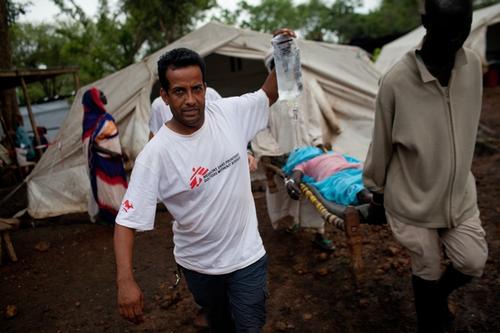
MSF was the only health provider serving about 250,000 people in Lankien and Pieri. Attacks against MSF facilities in these locations mean that local communities will be left without any healthcare.
"Given the current context, we will make the necessary decisions to protect the safety of our staff and healthcare facilities in South Sudan,” says Badshah.
“While we are aware of the enormous needs in the country, we find it unacceptable to be a target for attacks. MSF has been present for 43 years in what is today South Sudan, and we have treated millions of patients during this period, in different states and regions of the country."
Humanitarian restrictions
This bombardment followed the restrictions on humanitarian access that the Government of South Sudan has imposed exclusively in parts of opposition-held areas of Jonglei state since December.
These restrictions limit MSF’s ability to deliver essential medical assistance to communities, which can have particularly dangerous consequences for children, pregnant women, and people living with chronic or life-threatening conditions.
In 2025, MSF experienced eight targeted attacks, forcing the closure of two hospitals in Greater Upper Nile state and the suspension of general healthcare activities in Jonglei, Upper Nile, and Central Equatoria states.
MSF has been present in what is today South Sudan since 1983 and remains one of the largest medical humanitarian organisations in the country. We operate in seven states and two administrative areas.
In 2025, MSF provided more than 830,000 outpatient consultations and inpatient care for over 93,000 patients, including 12,000 surgeries. We also screened 107,000 children for malnutrition and performed critical referrals across the country.
MSF in South Sudan
In July 2011, South Sudan became the world’s newest country after gaining independence from Sudan. The peace deal that led to the split also ended Africa’s longest running civil war. But in December 2013, South Sudan civil war erupted again, forcing millions of people from their homes, leaving many without access to basic necessities, such as food, water and healthcare.
Although a peace deal was reached in 2018, the security situation remains volatile in many areas, with factional violence continuing to hit communities hard.
Médecins Sans Frontières/Doctors Without Borders (MSF) works in hospitals and clinics throughout South Sudan, where we run some of our biggest programmes worldwide.