Gaza: “These evacuations are life-changing and life-saving”
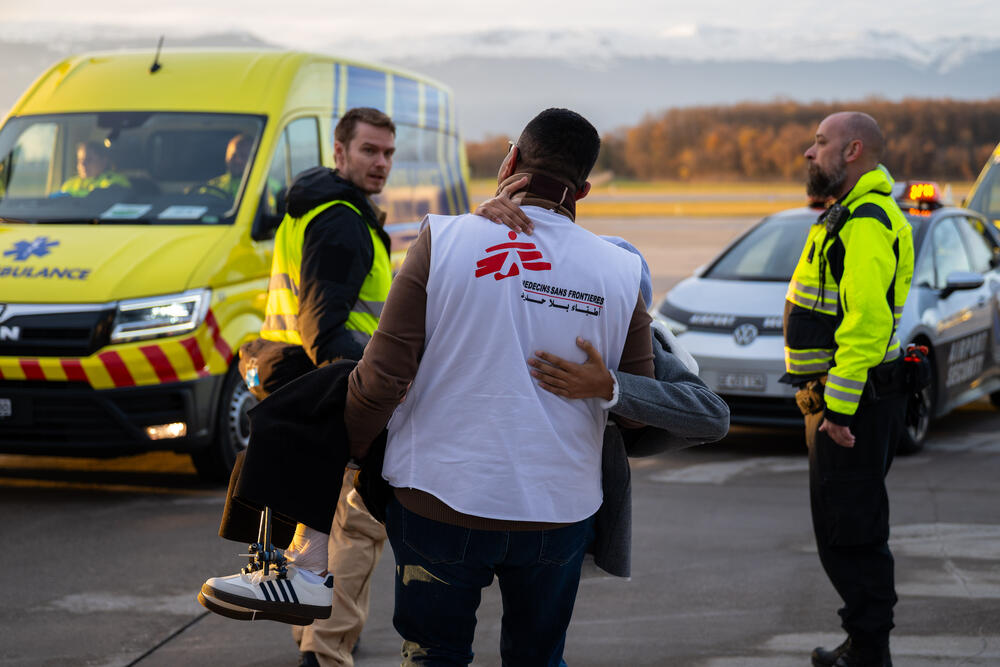
Médecins Sans Frontières / Doctors Without Borders (MSF) welcomes the Swiss government’s recent evacuations and urges the UK to scale up efforts to save as many patients as possible.
Following two years of intense war in Gaza, the healthcare system is destroyed, thousands of people are suffering from complex trauma injuries caused by bullets and bombs or from life-threatening conditions such as cancer or kidney failure.
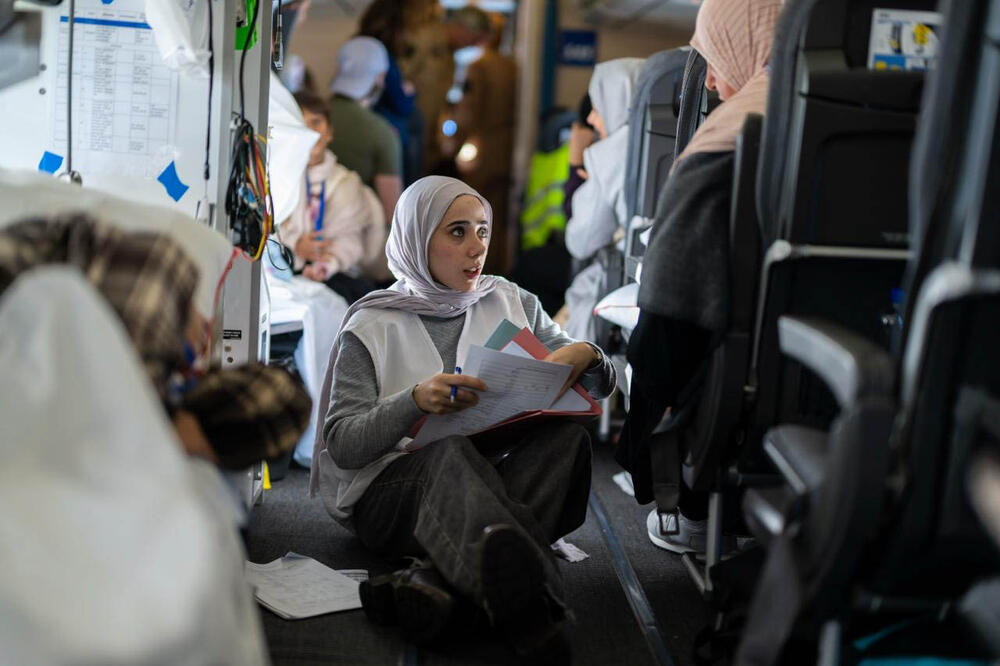
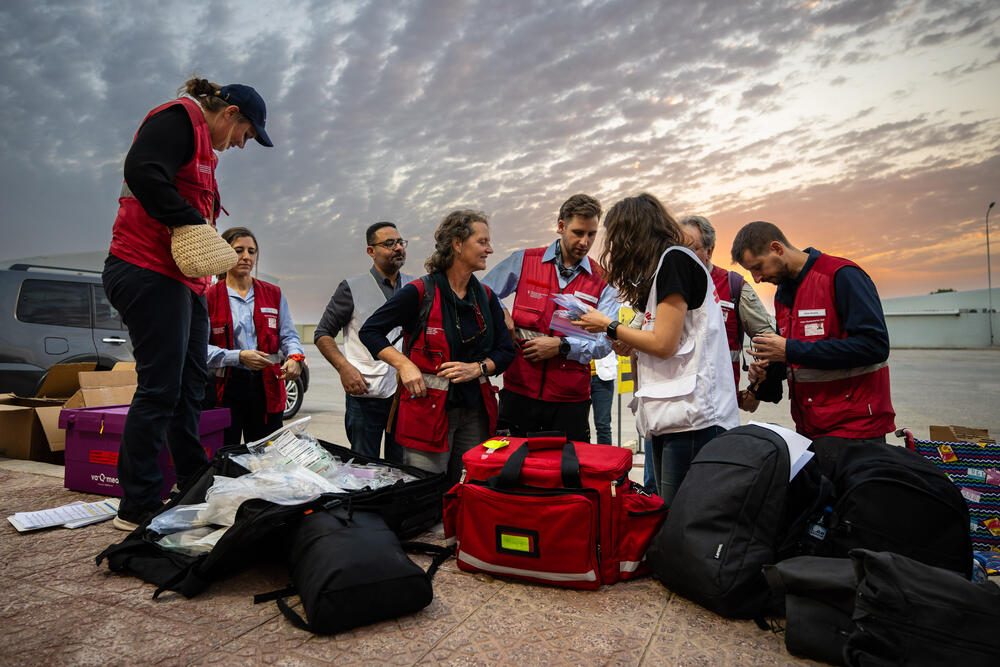
As the Swiss government’s humanitarian partner for the medical evacuations from Gaza, MSF supported two rounds of medical evacuations of children. Our teams provided medical, mental health and logistical assistance to 20 patients and their families from their departure in Gaza to Amman and on to Switzerland.
“These evacuations are life-changing and life-saving,” said Trish Newport, Head of MSF Emergency Response, in Switzerland.
Already, more than 900 patients have died while waiting to be evacuated for treatment, and over 16,500 patients remain on the medical evacuation list.
According to World Health Organization, several governments have evacuated thousands of patients from Gaza including 3,995 patients to Egypt, 1,499 to the United Arab Emirates and 970 to Qatar, as of 21 October.

Witnessing Gaza’s medical evacuations: Dr Hani Isleem's testimony
Dr Hani Isleem, MSF Project Coordinator, accompanied 13 children evacuated from Gaza to Switzerland for medical treatment, along with their families, witnessing the depth of their trauma and suffering first-hand.
"As an MSF doctor, I’ve been part of 15 medical evacuation projects, for patients coming from Gaza through Egypt and Jordan. As the partner of Swiss and EU authorities for facilitating medical evacuations from Jordan, MSF has participated in medical evacuations to Switzerland, Ireland, UK and Spain.
The official number of patients registered by the WHO for medical evacuations is 16,500, but this is only a drop in the ocean. Many more patients need evacuation. About half of the patients on this list are victims of genocide and bombing, with severe fractures, burns, spinal injuries, amputations, and little access to rehabilitation.
Others have medical needs like congenital anomalies or cardiovascular diseases, which get worse by delayed treatment. Starvation and delayed care worsen their conditions by the day.
Accompanying patients to Switzerland revealed every detail of their ordeal to me. There were 13 children in this round who were brought to Switzerland for treatment, with their family members. They were exhausted, traumatised, and anxious about family left behind.
One moment that struck me profoundly was at Queen Alia Airport in Amman: a passenger passed by with a dog, and mothers quietly remarked, “See, even this dog has a passport, and he can travel anywhere, but we cannot.”
They laughed on the surface, but the words revealed a deep sense of injustice and dehumanisation faced by the Palestinian people for years.
A deeply frustrating process
During their stay in Amman, they were provided three meals per day, something routine for us, but for them, it was an overwhelming experience. It made me realize the extent of their malnutrition. Many developed gastroenteritis, simply because their bodies were not used to proper nutrition after prolonged deprivation. In Gaza, they hardly had one meal per day.
The evacuation process itself is complex and deeply frustrating. Urgent patients often die while waiting. I remember our colleague Abed El Hameed, who was injured in an Israeli attack in Gaza that also wounded several others and killed our colleague Omar Hayek on the spot.
Abed El Hameed was critically injured and urgently needed surgery, which was not possible in Gaza. We tried to evacuate him, but he died within two days while waiting for clearance. If he had access to proper medical treatment, he could have survived. I can only imagine how many patients like him have died while waiting. Officially, around 900 patients registered for medical evacuation have died before they could be evacuated, and the true number is likely much higher.
“Watching patients die while waiting for evacuation is the worst feeling imaginable”
Another challenge is the limited number of destination countries. Very few countries are willing to accept patients from Gaza, and those that do often impose strict “shopping list” criteria that must be met.
On top of this, countries that accept patients tend to prioritise children, who represent only about 25 percent of all cases. Adults and elderly patients are frequently denied evacuation, and the paperwork, security checks, and medical reviews create even further delays.
Small moments of joy
Each day, we witness human cost. Watching patients die while waiting for evacuation is the worst feeling imaginable. But there are small moments that I will always remember with joy and sorrow. In another medical evacuation from Amman, we were in an ambulance with children when one of them suddenly screamed in excitement. He had seen a baklava shop nearby.
I took them inside, and as the children ran in, the boy called his father on video and showed him all the sweets in the shop. His father, still in Gaza, stared at the baklava with such deep longing that I wished I could bring him some.
The children were overjoyed. They laughed, picked out sweets eagerly, and kept repeating that they had not eaten baklava in two years. It was a small but profound reminder of what they had been deprived of. It’s not just food, but the simple pleasures of childhood that children in Gaza have lost.
I am Palestinian by origin. My parents are from Gaza, and I still have family there, though I have never been able to visit them in my life. It is deeply painful to witness my people endure unimaginable suffering.
It hurts even more when I hear comments like, “there is a ceasefire in Gaza. Why can’t these patients be treated there?” The reality is that people fleeing Gaza are not leaving by choice. They are fighting for their survival.
The health system in Gaza has collapsed. Hospitals are destroyed, staff are displaced, and medical supplies are scarce.
Many patients require care that simply isn’t available locally. Medical evacuation is the only way to save lives until the system is rebuilt, and despite the so-called ceasefire, people continue to die in armed attacks.
Another thing I often hear is, “why are you emptying Gaza of its people?” I want to stress the fact that medical evacuation does not encourage immigration. Patients retain the right to return to Gaza once their treatment is complete.
We reassure patients and their families that they have the right to return to Gaza when proper follow-up and access to medications will be available.
In this job, every day brings new stories of suffering, resilience, and hope. As a doctor and humanitarian worker, watching patients die without treatment while awaiting medical evacuation is heartbreaking beyond words.
But every life saved, every child given a chance to eat, play, and recover makes this work profoundly worth it."
MSF and the Gaza Genocide
While working to save lives in Gaza, our teams have seen the deliberate targeting of medics and hospitals; the use of starvation as a weapon of war with a blockade starving people of food, water, fuel and medical supplies; the militarisation of aid, and the massacre of starving people queuing for aid.