Syria: A special delivery at the ‘house-pital’

When labour starts, the clock starts ticking. In Syria, where healthcare has been devastated by years of conflict, long and expensive journeys are putting vital services out of reach for women who need maternity care urgently.
In the war-damaged city of Al Bukamal, options for a new MSF medical facility were limited. Nursing manager Hanadi Katerji was part of the resourceful MSF team setting up a birth centre inside a normal house.
"It’s six in the morning and I hear a knock on the door. Until recently, the building I’m now in was a house, with the typical kitchen, living room, and bathroom.
But, over the past few weeks we’ve been transforming the space, trying to provide essential medical care in a city that was mostly destroyed during Syria’s civil war.
I spent yesterday elbow-deep in boxes, unpacking and setting up the new maternity ward on the ground floor. The midwife manager was on the phone, calling around for midwives who’ll be travelling from across the district to work here.
Last night, we put the word out across local community WhatsApp groups – at last, the birth centre is open.
We knew the demand for a safe place to give birth with trained midwives for no cost would be high. But we didn’t know how quickly the word would spread—and that we’d be face-to-face with a heavily pregnant young woman only a few hours later.
Aliya* is ready to give birth to her first child. But are we ready for her?
Life in the aftermath
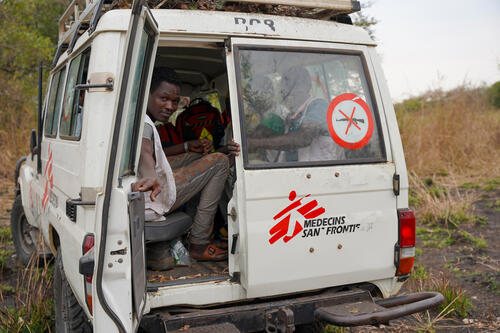
From Syria’s capital Damascus in the west, to Deir Ez-Zor in the east, the entire stretch is desert, other than the ancient city of Palmyra in the middle. But the drive from Deir Ez-Zor along the Euphrates River towards the city of Al Bukamal is green; this is part of the historic Fertile Crescent, where human agriculture is thought to have first begun. Here, people continue to farm the land.
Despite the ability to grow some crops, malnutrition is still a major concern, as people struggle to find the range of foods needed for a nutritious diet. Access to water and electricity are huge problems. People might get four hours of electricity in Deir Ez-Zor, and just two in Al Bukamal if they're lucky.
A lot of people have been living in camps for displaced people. Since the change in government, they want to move back to their own houses. But people are returning to live in unsafe, half-destroyed buildings.

In Al Bukamal, almost all of the large buildings were at one point commandeered by armed groups. As a result, they were all military targets and bombed during the war. This has meant that the MSF logistical team have struggled to find somewhere appropriate to use as a warehouse to store medical equipment. We’ve had to squirrel things away where we can. Various unused rooms in the house have become home to crucial water and sanitation supplies.
In the displacement camps, people were reliant on humanitarian aid, and economic opportunities continue to be scarce. Families are really living on the edge.
For households suffering from economic precarity, if a woman needs a C-section it could wipe out their budget for half a year, leaving them with a new baby and very little to live on.
That’s why when we assessed the medical needs in this region, we responded to a huge demand for maternity care.
The baby
I go downstairs and find a young woman with her aunt outside the front door. She's huffing and puffing – a contraction is coming.
Bringing Aliya inside to the delivery room, a scan shows her baby is in the right position with his head down. At this point she's already dilated six centimetres.
Aliya is perfectly calm throughout. I can’t believe how calm she is; as a teenager this is not how I would have been! As the midwife assesses her, she tells me that she and her sister were orphaned during the war, and after living with her aunt’s family for a period she married. She says she’s excited to be having her first baby.
Leaving her in the midwifes’ capable hands I return to my day’s tasks in the house. At around 11am I pass the delivery room and glance in to see Aliya squatting on the floor and breathing audibly. The baby is crowning. I decide to stay put in case they need any assistance.
Aliya was clearly delighted to have delivered a healthy baby boy.
It was such a lovely moment for the whole team—but we couldn’t spend too long celebrating. During just the first two weeks of opening we would go on to deliver 18 babies."
MSF in Syria
The Syrian people endured nearly 14 years of war. While political developments brought significant changes to the country at the end of 2024, the humanitarian situation remained dire. Following the change in government, MSF sent teams to Aleppo, Hama, Daraa, Deir ez-Zor, and other governorates, to deliver medical supplies to hospitals, health facilities, and camps, in coordination with health authorities.
The 'house-pital' will remain operational until the Al Bukamal clinic is fully rehabilitated as a maternity hospital. This work is planned to be completed by end of February and medical activities there are due to launch at the end of March.