Noma: “She used to ask me if her face could be corrected”
Noma is a debilitating and often deadly disease that mainly affects children living in extreme poverty and remote areas. In northwestern Nigeria, MSF supports one of the few hospitals in the world that specialises in treatment of noma, giving survivors a chance to rebuild their lives.
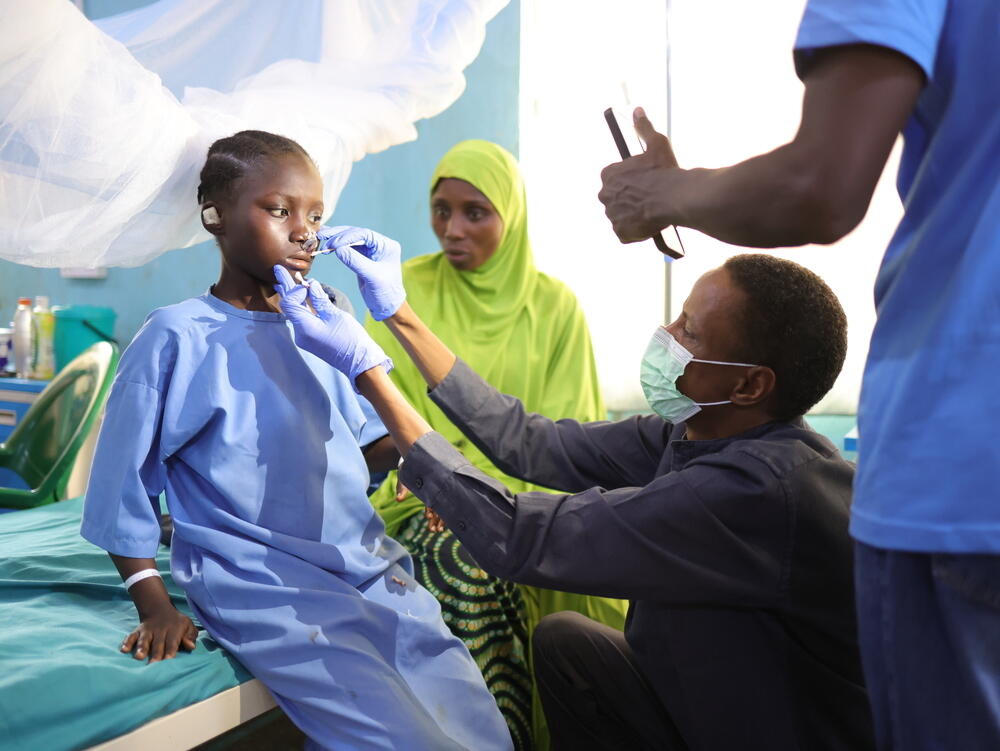
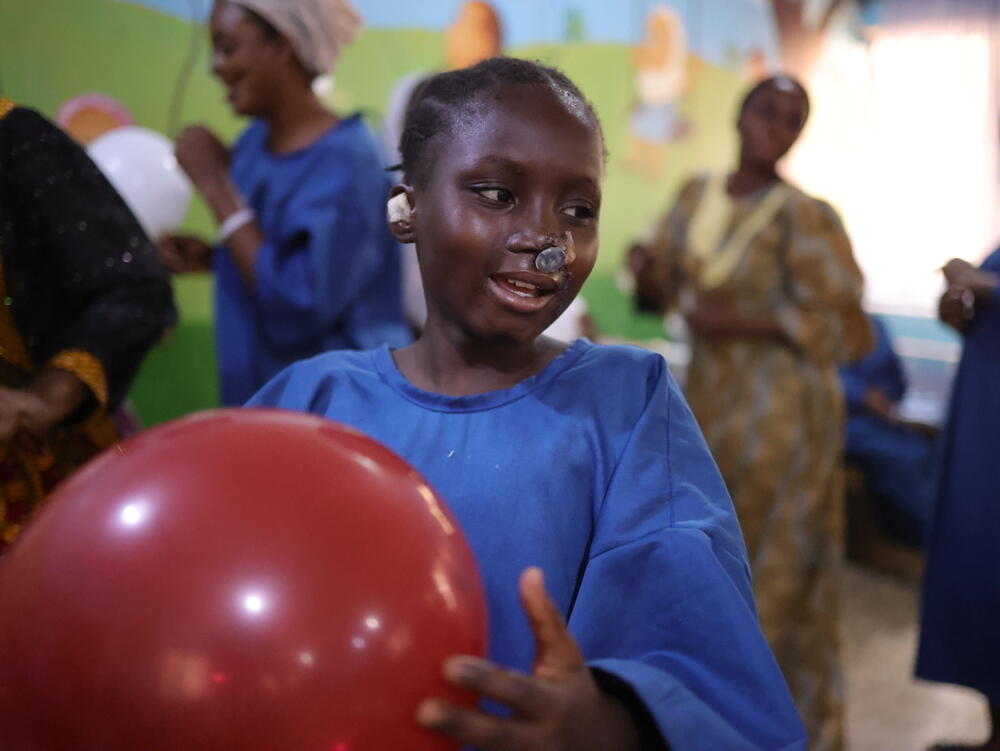
Hadiza sits beside her 12-year-old daughter, Maryam, on a hospital bed in the MSF-supported Noma Children’s Hospital in Sokoto state, Nigeria. The recovery room is bustling with people this morning. Surgeons and nurses move between the beds, examining patients recovering from surgery.
“I have always had one wish,” Hadiza says. “It was for her to have surgery.”
Next to her, Maryam nervously fidgets with her apron as she listens to her mother. It is the day after her surgery. Her left nostril is covered in bandages and filled with a nasal conformer to maintain the shape of her reconstructed nose. She had waited a decade for this moment.
Maryam was only 14 months old when a rapidly developing infection destroyed one side of her nose and was gradually progressing towards the other. Hadiza suspected it could be noma, after talking with family members who had heard about the disease through MSF health promotors.
She brought her daughter to the Noma Children’s Hospital, where healthcare workers quickly intervened with antibiotics and wound dressing, preventing further damage to her nose and the rest of her face. Had they not acted in time, the consequences could have been much worse, and possibly deadly.
Help us prepare for the next emergency
Noma disease
Noma is a non-contagious infection that starts with inflammation of the gums. Within a few days the disease rapidly spreads, causing destruction of facial tissues and bones. The fatality rate for infected people without treatment is as high as 90 percent, but early treatment is highly effective in halting the infection. However, survivors are left with severe disfigurements, making it hard to eat, speak, see or breathe, and they encounter a future of pain, disability and social stigma.
The exact cause of noma is poorly understood. The disease affects the most vulnerable, mostly children under seven years old, who live in poverty, or in isolated areas. Most of these children deal with malnutrition, lack of oral hygiene, and limited access to healthcare and routine vaccinations.
“Noma is preventable and treatable. If detected and managed during the first weeks of the disease, patients can recover within a few weeks with basic oral hygiene, antibiotics and wound dressing,” says Christopher Sunday, MSF health promotion supervisor in Sokoto.
“However, most parents don’t recognise the early signs of noma or lack the resources to seek healthcare. They seek help in their community from traditional healers, losing precious time and the opportunity to properly treat the infection.”
Biliya was also affected by noma from an early age. He was seven years old when a fever rapidly progressed into noma. Within days, the disease destroyed tissue on the left side of his face, affecting the functioning of his mouth and eye. He was brought to Noma Children’s Hospital from his home in Bakyarma village, a rural village in Tangaza local government area, in Sokoto state.
“The healthcare workers cleaned and dressed his wound and removed the affected tissue from his cheek,” says Biliya's grandmother, Halimatul.
“We were worried that Biliya's treatment would cost more than we could afford, but thankfully he received care free of charge.”
Treatment and long-term care
Early treatment is crucial for people affected by noma, yet awareness and knowledge about the disease remain limited, even among healthcare workers. Despite noma being formally recognised by the World Health Organization as a neglected tropical disease in 2023, it remains largely invisible within routine primary healthcare services, surveillance systems and financing frameworks in Nigeria.
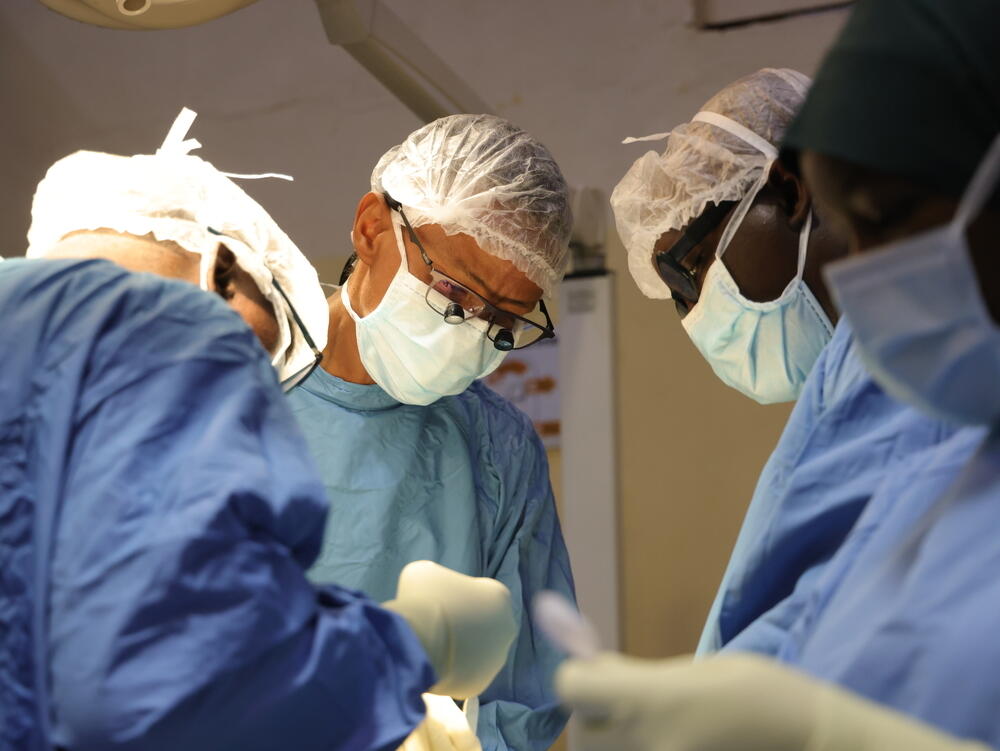
Noma survivors face a long and difficult road to recovery. Most of them require multiple reconstructive surgeries over several years to repair the disfigurements, along with extensive physiotherapy, nutritional support and treatment for other diseases linked to the development of noma, such as malnutrition, measles or malaria.
“When Biliya was admitted, he had surgery. For nine days he could not eat solid food; he could only drink milk,” Halimatul says.
“After the first surgery, Biliya's eyes still leaked tears, so we were asked to return for a second surgery on his eyes. This time, we came back for his third surgery.”

90%
PEOPLE WITH NOMA WHO DIE WITHIN TWO WEEKS WITHOUT TREATMENT

140,000
ESTIMATED NUMBER OF CHILDREN AFFECTED EACH YEAR

2 WEEKS
AMOUNT OF TIME RECOVERY TAKES WITH TREATMENT
Beyond physical scars
Noma survivors also face profound socio-economic consequences, including stigma, social exclusion and barriers to education and livelihoods. Many are forced to drop out of school because of bullying, and have difficulties finding partners or work, sometimes even after going through reconstructive surgery.
“People mock and exclude them. They tell them they look different, like they are not from this world,” says Christopher Sunday. “Some people believe that if you have noma, it is a curse from God.”
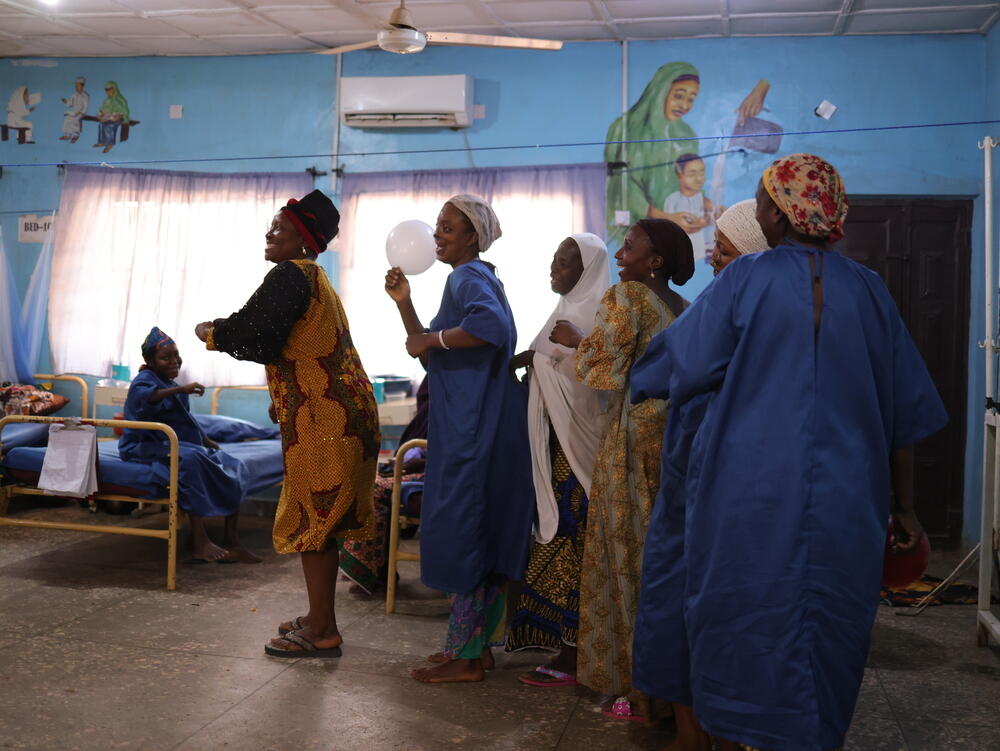
Psychosocial and mental health support is therefore an essential part of care for survivors in the Noma Children’s Hospital.
For Maryam, the stigma started at an early age. Growing up, she was bullied by other children for missing part of her nose.
“They laughed at her and called her names,” Hadiza says. “It hurt her deeply. She used to ask me if her face could be corrected.”
After receiving reconstructive surgery and psychosocial support, Maryam hopes the bullying in school will stop. She wants to become a doctor, inspired by the help she has received herself.
Eleven-year-old Biliya has faced similar challenges. “Some people in my town call me names and mock me. I feel hurt when they call me names,” he says.
“They stopped calling me Biliya, but started calling me mai doguwa, which means people who do black magic.”
“I have three friends at home. When I leave the hospital, I will visit them. I’m going to ask them to stop mocking me because I got surgery now and they fixed my mouth.”
MSF and noma
MSF supports the world's only dedicated noma hospital in northwest Nigeria. Our innovative programme at Sokoto Children's Hospital, run in collaboration with the Ministry of Health, focuses on outreach, education and surgery.