Afghanistan: Babies brought back from the brink
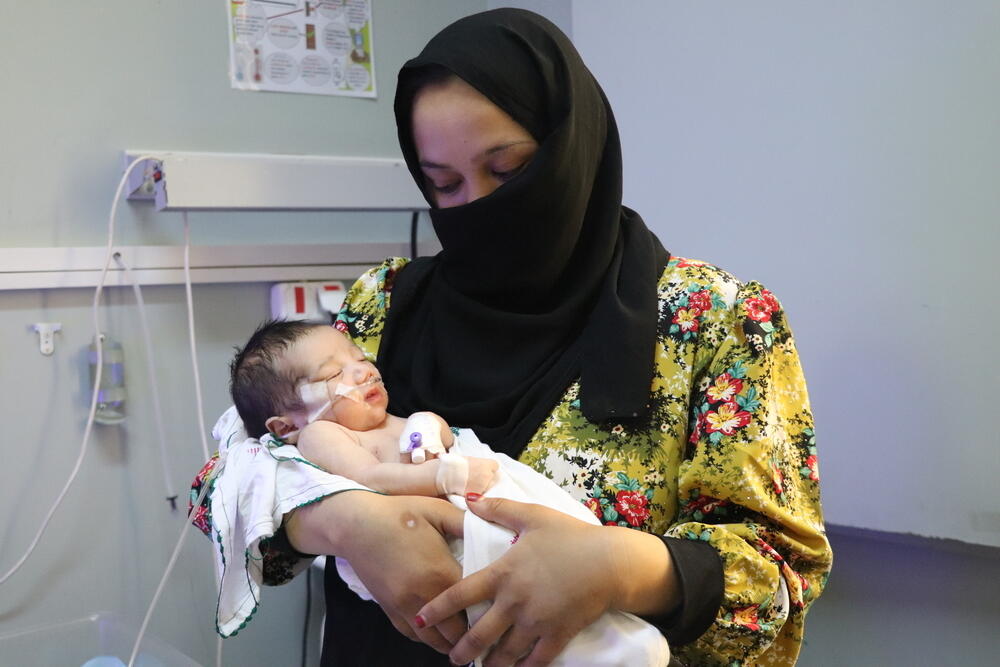
Abu Ali Sina Regional Hospital is one of the only fully functional hospitals in Mazar-i-Sharif, a city in northern Afghanistan. When babies get sick, families in the region need to take long and costly journeys to get care. The young patients who are seen, such as Farzana's baby Umar, often arrive in critical conditions.
Farzana arrived at the paediatric intensive care unit with her four-month-old son, Umar.
Their journey had been long, filled with uncertainty, and marked by desperate attempts to find the right medical help.
"My son was sick, and I first took him to the hospital in Maymana city of Faryab province, where he stayed for six days," Farzana recounts.
"He had measles, which eventually improved, but then he developed pneumonia. They couldn’t help us, so we moved to a private hospital in Mazar-i-Sharif. But they couldn’t help either, and that’s when we came to this hospital."
The constant moving from one hospital to another took a toll on Umar’s health. By the time Farzana made it to the MSF-supported Abu Ali Sina Regional Hospital, he was in a very bad state. His skin had turned blue, and he couldn’t breathe. The doctors immediately put him on oxygen. His chest was rising and falling heavily.
He was in such a bad state that Farzana thought he wouldn’t survive. At that point, she felt utterly helpless. The weight of the situation hit her hard, and she even fainted from the stress.
"I felt terrible," she says, "I didn’t know what to do. When I looked at him, I thought he wouldn’t recover. Both my husband and I were in a very bad emotional state. We had no hope because two hospitals had already turned us away."
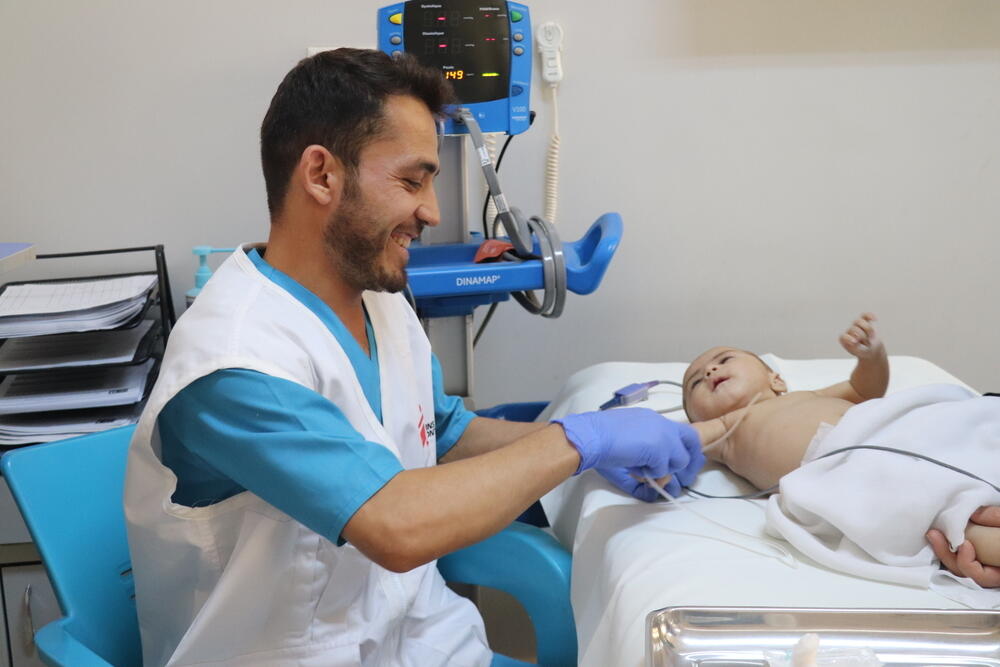
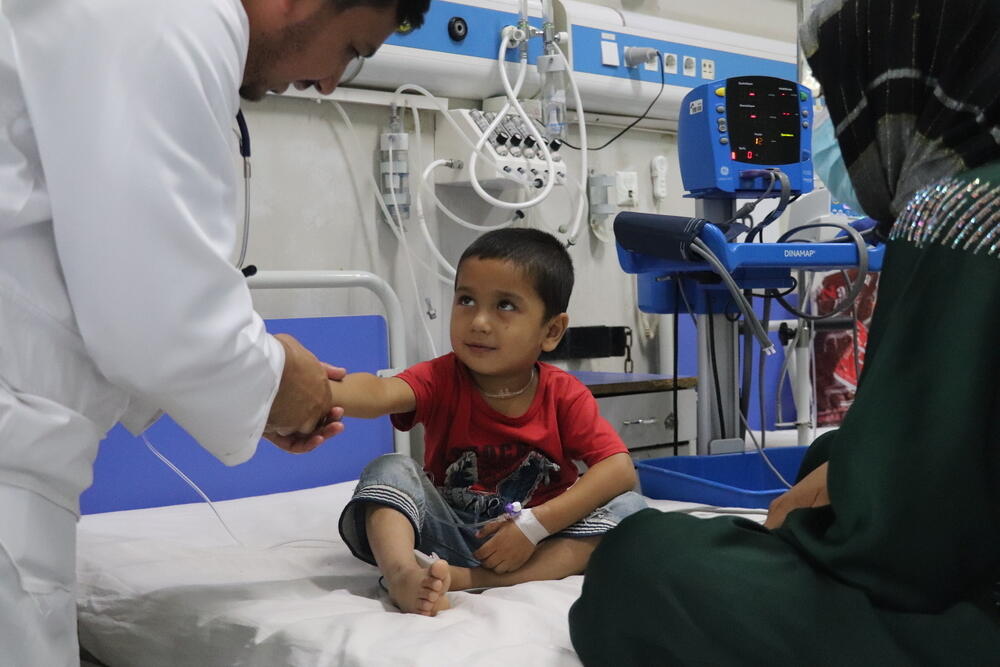
However, after 23 days at the hospital, Umar’s condition has improved. Initially requiring 17 litres of oxygen just to breathe, he now only needs two litres.
"Now, he is doing better. His colour has returned, and he can drink milk from his mouth, something he couldn’t do before," Farzana says with a sigh of relief. The emotion in her voice reflects the immense relief she feels as her son begins to recover.
Looking at Umar, now showing signs of improvement, Farzana feels hope again.
"Now that my baby is getting better, I feel happy again. I am very grateful to the doctors and nurses. They really worked hard to save him," says Farzana.
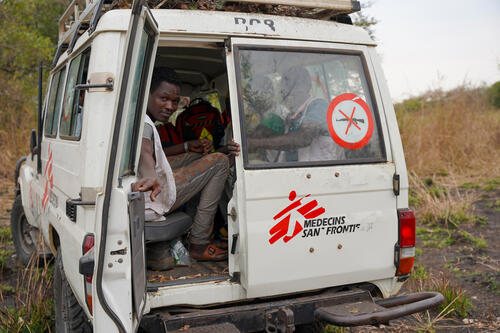
For patients in critical condition, an effective and well-coordinated referral mechanism is crucial to ensure timely access to higher levels of care. However, in Balkh province the referral pathways are often weak or dysfunctional. Many healthcare facilities lack the necessary resources, transportation, or communication systems to properly refer patients to secondary and tertiary hospitals, which can delay life-saving treatment.
MSF in Abu Ali Sina Hospital
In 2023, MSF teams began supporting Abu Ali Sina Hospital in Mazar-i-Sharif city to strengthen the delivery of specialised care for children.
This includes supporting the paediatric intensive care unit, the neonatal intensive care unit, the measles isolation room and the emergency room, which provides life-saving treatment for children up to 14 years old.

366,002
patients triaged by MSF teams at Abu Ali Sina Hospital since 2023

17,853
newborn babies treated in the intensive care unit by MSF teams at Abu Ali Sina Hospital since 2023

122,143
people admitted to the emergency room by MSF teams at Abu Ali Sina Hospital since 2023
MSF in Afghanistan
Our medical teams have continued to provide care to the people of Afghanistan throughout recent conflict and following the change of government in 2021.