South Sudan: MSF healthcare centre hit during airstrike

A Médecins Sans Frontières / Doctors Without Borders (MSF) healthcare facility has been hit during an airstrike by a helicopter gunship.
The event occurred in the early hours of Wednesday 3 December, in the town of Pieri, in Jonglei State.
After the facility was hit and the gunship left, MSF teams found bullets that had hit the buildings and infrastructure within the facility.
Later, MSF teams witnessed further airstrikes in Lankien, where MSF also runs healthcare facilities, but this time without direct damage.
In both locations, all MSF staff remain safe, and there have been no reported casualties among the local community linked to airstrikes.
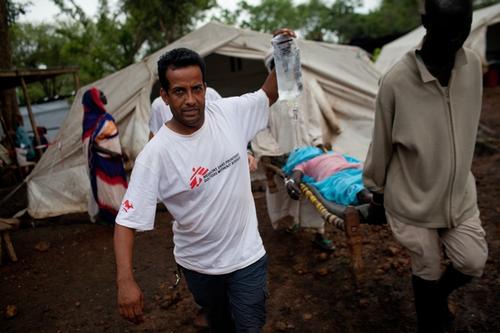
MSF is the only healthcare provider supporting women and children in Pieri, while our Lankien hospital is the only secondary healthcare facility providing life-saving care in the region.
In 2025, MSF staff and facilities in South Sudan experienced several attacks, forcing the closure of our hospitals at Old Fangak and Ulang in May and June, and the suspension of our essential healthcare programme in Jonglei, Upper Nile and Central Equatoria states.
Help us prepare for the next emergency
"The recent airstrike shows a deeply concerning pattern in which healthcare facilities are repeatedly hit or come under fire during persistent attacks," says Emmerson Gono, Deputy Head of MSF in South Sudan.
"We call for immediate protection of medical infrastructure, staff and patients in South Sudan."
MSF operates one of its largest programmes worldwide in South Sudan, responding to the many health needs resulting from ongoing conflict, displacement, recurrent floods and disease outbreaks.
All these issues are compounded by a marked decrease in international funding for humanitarian and development programmes, and the precarious state of the national healthcare system.
MSF in South Sudan
In July 2011, South Sudan became the world’s newest country after gaining independence from Sudan. The peace deal that led to the split also ended Africa’s longest-running civil war. But in December 2013, South Sudan civil war erupted again, forcing millions of people from their homes, leaving many without access to basic necessities, such as food, water and healthcare.
Although a peace deal was reached in 2018, the security situation remains volatile in many areas, with factional violence continuing to hit communities hard.