“What happened to the lady with the twins?”

“We were preparing to close the mobile clinic for the evening when Ajak arrived, steadying herself on the arm of a relative. We could hardly believe she was standing.
She told us that she’d given birth two days ago, while fleeing violence in the Lankien area of South Sudan’s Jonglei state, and had been walking for days to reach safety.
Eventually, she arrived at our clinic, upriver from the small town of Chuil. To make the journey on foot while postpartum, in temperatures sometimes surpassing 40 degrees Celsius, would have been difficult enough. But Ajak told us that she was carrying another baby, who she’d been unable to deliver. Two days later, the second child was still in her womb.
In my medical career I’ve never encountered this before. It’s likely that because Ajak was so dehydrated and exhausted, her uterus had stopped contracting. But a delayed delivery of a second twin is a medical emergency. The chances of infection and then sepsis were high. The survival of both Ajak and her second baby was at risk.
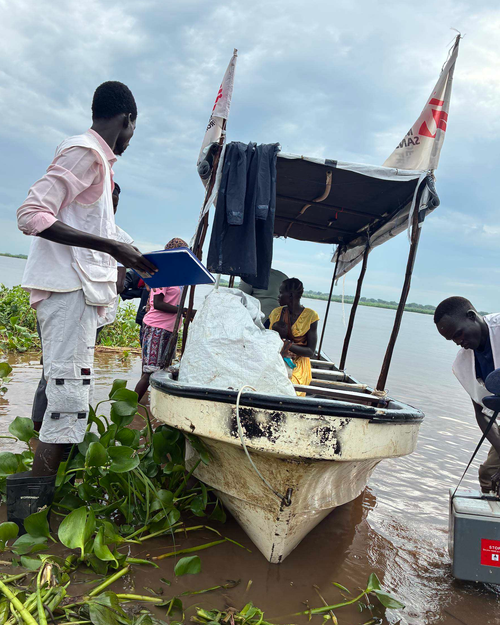
We gave her fluids and an initial dose of antibiotics to stave off infection, but she needed more medical care than our mobile clinic could provide. We knew we had to get her to the primary healthcare centre in Chuil for more specialist care. We would travel back the way we had come: via speedboat, along the Sobat river.
Our work saves lives
Fleeing violence
I had been working as a medical activity manager in the region for two months when Ajak arrived, and I had spent a lot of time on the Sobat river. Tens of thousands of people had fled the escalating violence around the town of Lankien, with at least 25,000 finding refuge in Chuil and many more taking shelter in the surrounding villages.
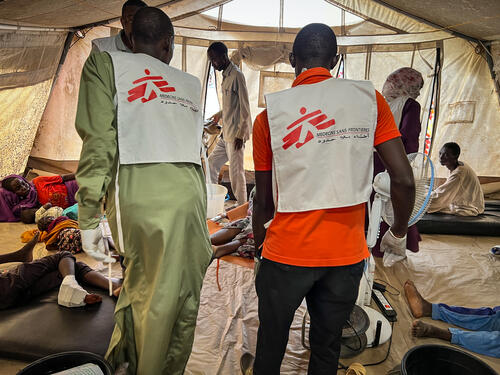
To reach as many people as possible, MSF started running mobile clinics from a base in Chuil. Every day, my team and I would set off in a speedboat along the river to deliver care in small towns on the river, and if any patients needed further treatment, we’d bring them back in the boat to Chuil.
Most people left everything behind when they fled their homes in Lankien, and many had been forced to flee multiple times. Arriving in the Chuil area, they slept under trees or constructed shelters with whatever materials they could find. MSF’s water and sanitation teams built latrines and a water purification plant, while MSF also distributed essential relief items: mosquito nets, blankets, sanitary pads, soap.
“When I left that evening, I feared the worst. I knew both Ajak and her unborn child’s lives were in danger”
Lives on the line
After an hour speeding down the river, we reached the Chuil health centre, where Ajak was admitted. She wasn’t the first new mother to arrive via speedboat; in fact, one woman had previously delivered her child onboard, as we were rushing her to the health centre.
The medical team gave Ajak more fluids, antibiotics, and medicine to encourage her uterus to begin contracting again. When I left that evening, I feared the worst. I knew both Ajak and her unborn child’s lives were in danger. And her first twin, a daughter, was still a tiny newborn, only days old.
I returned to the health centre two days later. I hesitated before I asked the midwives the question: “What happened to the lady with the twins?”
The response was unexpected: “Come and see her,” they said. “She just gave birth five minutes ago.”
Ajak had delivered a baby boy. He was not only born safely, he was bigger than his sister! Ajak and her twins, born four days apart, were all in a stable condition. It was very emotional to see them together.
Not only was I in awe of Ajak’s amazing strength and resilience, but it made me feel incredibly proud of the hard work and dedication of the MSF team. Many of my South Sudanese colleagues had themselves been displaced by the violence, they have lost their homes and are facing uncertain futures.
If Ajak had not made it to our clinic there was little chance any of them (including the newborn daughter) would be alive today.
MSF in South Sudan
Médecins Sans Frontières/Doctors Without Borders (MSF) works in hospitals and clinics throughout South Sudan, where we run some of our biggest programmes worldwide.
As well as providing basic and specialised healthcare, our teams respond to emergencies and disease outbreaks affecting isolated communities, internally displaced people and refugees from Sudan.