Humanitarian crisis in Yemen
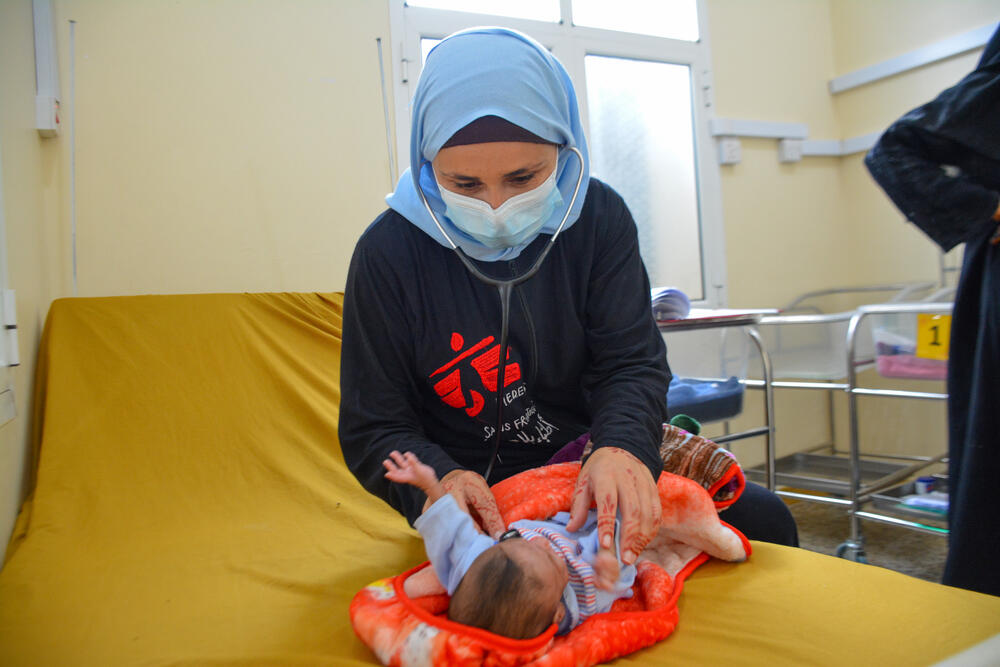
Yemen is experiencing a severe medical humanitarian crisis driven by a brutal civil war, deep cuts in international funding and military escalations, including some linked to the Gaza-Israel war.
Funding shortfalls and ongoing insecurity have forced health facilities across the country to close. Millions of people have been left with little or no access to essential services such as maternal care, vaccinations, emergency surgery, and treatment for chronic diseases.
More than 4.5 million people have been displaced since the war started in 2015. With an estimated 21 million currently in need of humanitarian assistance, our activities in Yemen are among our most extensive worldwide.

216,500
PEOPLE ADMITTED TO HOSPITAL BY MSF IN YEMEN IN 2025

29,600
PEOPLE TREATED FOR CHOLERA BY MSF IN YEMEN IN 2025

30,500
BIRTHS ASSISTED IN BY MSF IN YEMEN IN 2025
What is MSF doing to help people in Yemen?
MSF delivers life-saving care to people in Yemen affected by regional conflict and economic hardship, including an alarming rise in malnutrition cases.
Our teams in hospitals closer to the frontlines regularly respond to mass-casualty incidents, increasing their capacity to deal with frequent influxes of war wounded and other trauma patients.

MSF teams are also providing vital care for people affected by the long-term impacts of the war – high rates of malnutrition, low vaccine coverage, a lack of access to maternity services and complex mental health needs.
This includes emergency care, maternal and paediatric services, nutritional support, and specialised surgery.
We have also donated medical supplies and offered temporary assistance after handing over some of our long-running medical activities to local health authorities.
What you can do to help people in Yemen
Right now, our teams are treating people caught up in an appalling humanitarian crisis. This is only possible because of donations from people like you.
By giving to our general funds today, you will be helping ensure we can respond to emergencies and conflicts around the world, including in Yemen.
Please donate today to support our teams
Malnutrition care
Limited availability of nutritious food for families means health facilities in Yemen are increasingly overwhelmed by the numbers of malnourished children. This is made worse by gaps in healthcare and vaccination coverage.
Despite shrinking international funding, our teams are expanding inpatient capacity to treat children with moderate acute malnutrition and continue to increase the number of children we treat for severe acute malnutrition.
Maternal and child healthcare
MSF runs comprehensive maternal, neonatal and paediatric services in Yemen. This includes inpatient and outpatient care, ante- and postnatal consultations and assistance with deliveries, including caesarean sections.
In the north of the country, there has been an increase in admissions to maternity rooms for deliveries and a high demand for paediatric services.
Emergency healthcare
We continue to support emergency responses to outbreaks of acute watery diarrhoea and treat people injured in airstrikes in Yemen during regional military escalations linked to the conflict in Gaza.
Years of protracted conflict, crumbling infrastructure, and a lack of access to clean water and sanitation services, compounded by heavy rains, have consistently fuelled the spread of water-borne diseases in the country.
MSF has opened diarrhoea treatment centres in collaboration with the Ministry of Health and set up several oral rehydration points in the community. We are also working with community health workers to raise awareness of the disease.

Why is Yemen in crisis?
Collapsed health system
Warring parties have destroyed much of the country's public infrastructure, including health facilities. Following the imposition of a blockade by the Saudi-led coalition (SLC) in 2015, import restrictions coupled with high inflation have crippled Yemenis’ access to healthcare and other essential services.
Many of the country’s 50,000 health workers stopped receiving salaries and have consequently left the public health system, forced to look for other sources of income.
The healthcare facilities that continue to function are overwhelmed with patients, and struggle to provide adequate care due to shortages of medicines and staff. This growing strain on the healthcare system is putting more lives at risk.
In the north of the country in particular, humanitarian capacity has declined, facing additional strain on MSF-supported facilities.
Women often give birth at home and seek care only when complications occur.
Disease
As a result of the war, it is even harder for people to access clean water, dispose of waste and get medical care. Combined with the lack of access to vaccinations, this has left Yemenis more vulnerable to preventable diseases and new epidemics.
There has been a marked increase in preventable diseases such as cholera, diphtheria and measles over recent years, due to low vaccination coverage, poor living conditions and the collapse of the healthcare system.
Malnutrition
Malnutrition rates are alarmingly high in Yemen.
Food insecurity and a lack of access to basic healthcare services mean that many children lack the ability to fight off infectious diseases.
Inflation is also another contributing factor, making it increasingly difficult for Yemenis to feed their children and afford the cost of transporting them to hospital.
News and stories from Yemen